 Skip to content
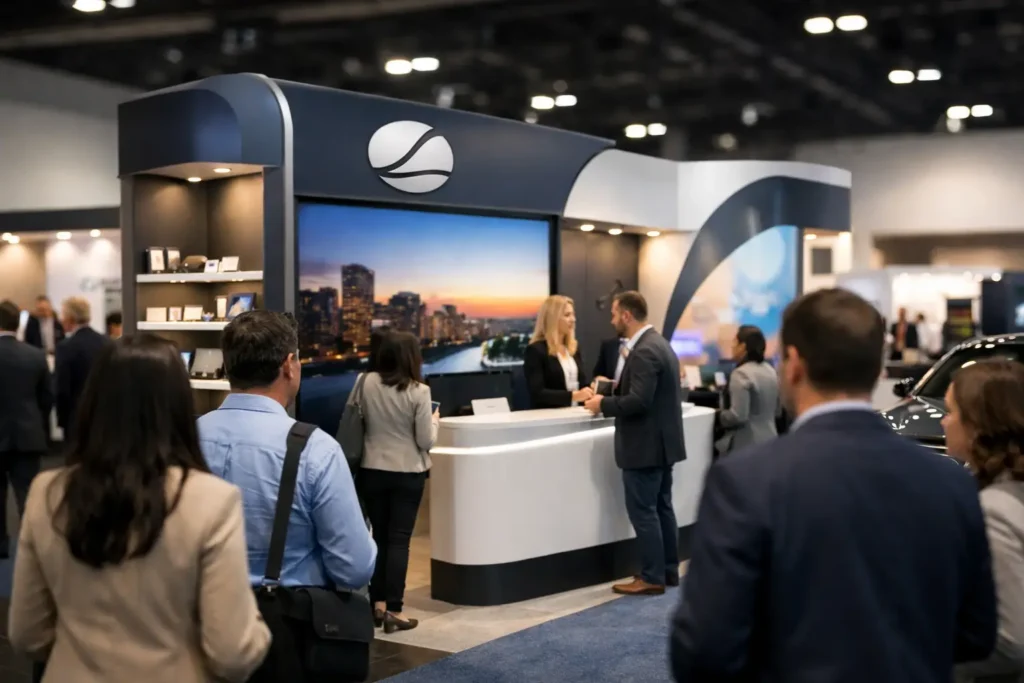
A trade show floor gives buyers hundreds of reasons to keep walking. Your booth has a few seconds to tell them who you are, what you offer, and why they should stop. The right trade show displays do that work before your team says a word. They make your space visible from the aisle, give visitors a reason to approach, and support the conversations that turn event traffic into real leads.
For a local business, school, dealership, nonprofit, or national marketing team, the best display is not always the largest one. It is the one that puts your brand message in the right place, uses the space well, and holds up through a busy event schedule.
Start With the Job Your Display Needs to Do
Before choosing a banner, tent, table cover, or flag, decide what success looks like at the event. Are you introducing a new product? Building awareness in a crowded convention hall? Collecting sign-ups for a fundraiser? Meeting customers outdoors at a community festival? Those goals affect the display format, the message, and the amount of branding your booth needs.
A 10-by-10 booth at an indoor expo may need a clean back wall, a branded table cover, and one or two vertical flags that can be seen down the aisle. An outdoor activation may call for a canopy pop-up tent, feather flags, and fabric banners built to catch attention at a distance. A sales team attending several small regional events may value lightweight pieces that pack quickly and work in different booth sizes.
Do not buy individual pieces simply because they look good on their own. Think of the booth as one visual system. Every piece should lead visitors back to the same name, color palette, and message.
Choose Trade Show Displays by Viewing Distance
The most common display mistake is putting too much information where no one can read it. A trade show booth has three viewing distances, and each one needs a different job.
From across the floor, people should see your brand name, logo, or a short benefit statement. Large-format fabric banners, canopy valances, feather flags, and tall backdrop graphics are effective here. Use bold color contrast and a message that can be understood in a glance.
From the aisle, visitors should be able to tell what you sell and who it is for. This is the place for a simple headline, a product image, or a clear callout such as “Custom Team Flags,” “Fundraising Starts Here,” or “Mobile Branding for Dealerships.”
Once someone is standing at your table, supporting details matter. Table covers, podium banners, printed handouts, product samples, and smaller signs can explain options, features, or pricing. Your staff should not have to point out the basics because the display failed to communicate them.
A useful rule is to give each graphic one priority. Your logo does not need to compete with five product photos, three taglines, and a paragraph of company history. Let the big display earn the stop, then let your team and close-up materials provide the detail.
Build a Booth Around the Space You Have
Trade show organizers provide a booth footprint, but they do not hand you a ready-made presence. A strong setup uses vertical space without making the booth feel closed off.
For smaller inline booths, a branded backdrop or fabric banner creates an immediate focal point behind the table. Add a fitted or stretch table cover to carry your logo toward the aisle. If event rules and space allow, a feather flag or teardrop flag can add height and motion near the edge of the booth without blocking the walkway.
Corner booths get visibility from two directions, so your graphics should work from both. Avoid putting all of your key messaging on one back wall. Use a flag, banner, or side-facing sign to give passersby a reason to notice you from the open side.
Island booths offer more room, but they also require more discipline. Large displays can look impressive, yet too many competing graphics create noise. Establish one main visual message and repeat it across banners, tent graphics, counters, and flags. Visitors should recognize your company no matter which side they approach from.
Outdoor shows come with another set of variables: wind, sun, uneven ground, and changing weather. Choose commercial-grade display materials and appropriate bases for the conditions. A light indoor sign may be easy to carry, but it is not automatically the right choice for a windy parking lot or sports field. Match the product to the environment, especially when the event runs for multiple days.
Make Your Graphics Easy to Read
Custom printing gives you flexibility in size, shape, fabric, and color. That flexibility works best when the artwork is designed for real-world viewing, not just a computer screen.
Keep the logo large and give it breathing room. Use high-resolution artwork so printed edges stay clean at display size. Select colors that fit your brand but also stand apart from the venue. A pale logo on a pale convention wall can disappear, while strong contrast helps your message carry across a busy floor.
Text should be brief. A powerful headline can do more than a list of every service you offer. If your business has several product lines, feature the one that matters most to that event audience. You can cover the rest in conversation.
Photos can add energy, particularly when they show your product in use. But a low-quality image enlarged on a banner can weaken the whole booth. If you only have a logo or a rough idea, that should not stop the project. A full-time design team can recreate artwork, refine a file, or develop a complete display concept that fits the format you choose.
Pick Formats That Work Hard After the Event
The best event branding can be reused. When planning a display package, consider where each item can go next.
A custom table cover can move from trade shows to school functions, recruitment fairs, fundraisers, and community events. Feather flags work well outside a storefront, at a golf outing, or near an event entrance. A canopy pop-up tent can serve product demonstrations, tailgates, sponsorship activations, and weekend festivals. Fabric banners can become a reliable backdrop for photos, presentations, and indoor promotions.
That does not mean every display must be all-purpose. A highly targeted product launch backdrop may be exactly right for one major show. The key is choosing intentionally. Spend more on the pieces that will represent your brand again and again, and use event-specific messaging where it will have the strongest return.
Storage and transportation deserve attention, too. Ask how a display packs, how quickly it can be set up, and whether your team can handle it without extra labor. A large custom structure can create a major visual impact, but a compact banner-and-table package may produce better results for a team traveling by car to frequent local events.
Create a Clear Path Into the Booth
A display can attract attention, but the booth layout has to welcome people in. Keep the front open. Do not create a wall of tables, boxes, or product racks that makes visitors feel as if they are interrupting.
Place your strongest message where it faces traffic, then give visitors an easy next step. That may be a product demonstration, a giveaway, a sample, a QR code, or a simple invitation to talk with a team member. The display should support that action rather than distract from it.
Think about what your staff will say when someone stops. If the banner promises custom outdoor flags, have examples ready. If the booth promotes a fundraising program, make the process clear. Visual consistency builds trust, but knowledgeable people close the gap between interest and action.
Plan Earlier Than You Think You Need To
Custom trade show materials are made for your brand, not pulled from a shelf with a generic template. That is what makes them more memorable, but it also means artwork approval, printing, finishing, and delivery need time.
Start with the event date, booth size, venue rules, and your main goal. Then collect logo files, brand colors, required copy, and any images that belong in the design. If several people need to approve the artwork, set that process early so the project does not stall at the finish line.
Flags Made can help turn a finished design file, an outdated logo, or a basic idea into made-to-order event branding. The Flag Makers work with businesses and organizations that need the right sizes, fabrics, shapes, and printing approach for their display plan.
A booth does not need more stuff to be memorable. It needs a clear message, a display format suited to the venue, and branding people can recognize from the aisle. Build those pieces around the conversation you want to start, and your next event space will have a much better chance of making people stop.