 Skip to content
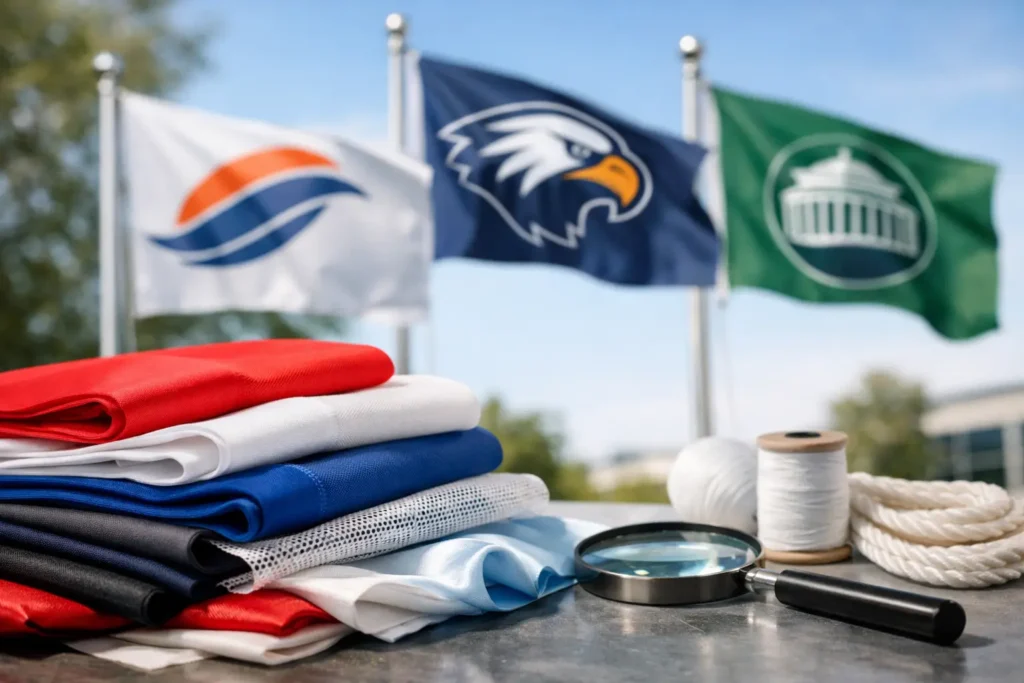
A flag can have great artwork and still underperform if the fabric is wrong for the job. A lightweight flag that looks sharp in a showroom may not last through a windy parking-lot promotion. A heavy outdoor material may be more durable, but it can lose the movement that makes a feather flag or car flag catch attention. Knowing how to choose flag fabric starts with one practical question: where will people see it, and what will it need to withstand?
For custom promotional displays, fabric affects more than durability. It changes color appearance, print clarity, how the flag moves, how it handles wind, and how easily it travels from one event to the next. The right choice depends on the display format and the conditions, not simply on choosing the heaviest material available.
How to Choose Flag Fabric by Use
Start with the setting. Is the flag going outside every day, appearing at a one-day fundraiser, riding on a vehicle, or hanging inside a lobby or trade show booth? Each environment puts different demands on the material.
Outdoor flags need a fabric that can handle sun, wind, moisture, and repeated motion. Polyester is a common choice because it is durable, holds printed color well, and performs reliably in a broad range of weather conditions. It is a practical fit for business flags, school flags, sponsor flags, street-pole displays, and event signage that will spend meaningful time outdoors.
Indoor flags have fewer weather concerns, so visual finish and presentation may matter more. A smoother polyester can provide crisp printed graphics for a podium banner, club banner, indoor flag, or retail display. If the flag will hang mostly still, you do not need to prioritize wind resistance in the same way you would for an exterior installation.
For car flags, antenna flags, and mirror socks, the material must handle constant movement and road exposure. Lightweight polyester is often the smart direction because it keeps the display moving without adding unnecessary drag. The mounting method matters here too. Fabric, hardware, finishing, and the expected driving conditions should be considered together.
Match Fabric Weight to Wind and Movement
Fabric weight is one of the biggest choices in a custom flag project. In general, lighter materials move easily and are easier to transport. Heavier materials offer more body and may stand up better in demanding outdoor use, but they can need stronger wind to create the same visual motion.
A lighter flag fabric works well when movement is part of the display. Think feather flags outside a dealership, swooper flags near a grand opening, teardrop flags at a race, or handheld stick flags at a parade. These formats are designed to be noticed from a distance, and responsive movement helps do the work.
A heavier fabric can be a better match for a standard outdoor flag or a larger custom banner that needs to feel substantial and remain readable. That said, heavier is not automatically better. In very windy locations, any flag experiences stress at the fly end, seams, hems, and grommets. A heavy fabric catches more force, while a lighter fabric may flutter more freely. The best choice depends on the flag size, pole setup, exposure level, and how long it will remain installed.
If your location gets consistent high wind, plan for realistic replacement expectations. Even commercial-grade flags are moving display products, not permanent rigid signs. Sun, wind, weather, and continuous use all affect lifespan.
Consider Print Style and Artwork Detail
The fabric should support the way your design needs to look from both near and far. Custom flag printing is often viewed at a distance, where high-contrast color blocks, bold type, and simplified logos perform best. But details still matter, especially for sponsor logos, school crests, event marks, and photographic art.
Polyester fabrics are widely used for full-color custom printing because they can produce bright color and clear graphics. Many flags are printed using dye-sublimation, a process that bonds ink into the fabric rather than leaving a thick layer on top. This helps preserve the material’s flexibility and creates a professional finish that moves naturally.
Single-reverse printing is a common option for many flags. The artwork reads correctly on one side and appears reversed on the back, often with color showing through. It is an efficient choice for flags viewed primarily from one direction or where the reverse side does not need readable copy.
If your message must read correctly on both sides, ask about double-sided construction. This typically involves two printed layers with a blocker material between them, or another method designed for two-way readability. It can add weight and cost, but it is worth considering for street-facing displays, pole flags, sponsor recognition, and locations where viewers approach from both directions.
Before choosing the fabric, look honestly at the artwork. Fine lines, tiny lettering, and subtle gradients can print well, yet may not be effective when a flag is waving 30 feet away. A full-time design team can help simplify a layout, rebuild a low-resolution logo, or adjust colors so the final display stays clear in real conditions.
Think About the Flag Format, Not Just the Fabric
A fabric that works for one flag style may not be the right fit for another. The shape and purpose of the finished display should guide the decision.
Feather flags, teardrop flags, and swooper flags need fabric that works with a flexible pole system and maintains an attractive curve or profile. Their value comes from height, movement, and visibility, so lightweight printed polyester is often a strong fit.
Traditional outdoor flags need durable construction at stress points. In addition to fabric selection, pay attention to reinforced headers, grommets, pole sleeves, corner stitching, and hem construction. These details have a major impact on how a flag performs once it is installed.
Golf pin flags need a material that presents a logo cleanly while accommodating frequent handling and outdoor exposure. Stick flags need to stay light enough for easy distribution at a parade, campaign event, school spirit day, or celebration. Fabric banners may need more structure, depending on whether they hang from a truss, attach to a fence, or serve as a backdrop.
There is no one-size-fits-all answer because the display itself changes the demands. A good manufacturer will ask how the product will be used before steering you toward a material.
Balance Durability, Budget, and Replacement Plans
A custom flag is an investment in visibility, but the most expensive fabric is not always the most cost-effective selection. Consider the campaign timeline and how often the display will be used.
For a weekend festival, temporary grand opening, political event, golf outing, or one-time fundraiser, a lighter event-ready material may deliver exactly what you need. For a dealership promotion, municipal display program, school campus, or business location where flags will fly regularly, durability and reinforced finishing are usually worth prioritizing.
Ordering quantities also changes the conversation. If you are planning a multi-location promotion or an annual event, it can make sense to produce extra flags at the same time. You will have consistent branding on hand and can replace weather-worn displays without redesigning from scratch. For high-volume custom orders, planning ahead can protect both your budget and your brand presentation.
Do not overlook storage. Make sure flags are clean and dry before folding them away. Keeping them out of prolonged moisture and direct sunlight when not in use helps maintain color and fabric condition. A flag that is used only for scheduled events can last much longer when it is handled and stored properly.
Questions to Ask Before You Approve Production
Before finalizing a custom flag order, be ready to answer a few production questions: Will it be indoors or outdoors? How long will it be displayed? Is the location calm, breezy, or exposed to strong wind? Does the artwork need to read on both sides? Will the flag be mounted on a pole, vehicle, fence, tent, or flexible flag stand?
Also share the size you have in mind and whether you already have print-ready artwork. If you do not, that should not stop the project. Flags Made can work from an existing logo, improve supplied art, or help create a complete custom design that fits the selected flag format and fabric.
The best flag fabric is the one that supports the actual job: clear branding, appropriate movement, dependable wear, and a finish that looks right for your organization. Bring the use case, location, size, and artwork goals to the conversation, and the right material choice becomes much easier to make.