 Skip to content
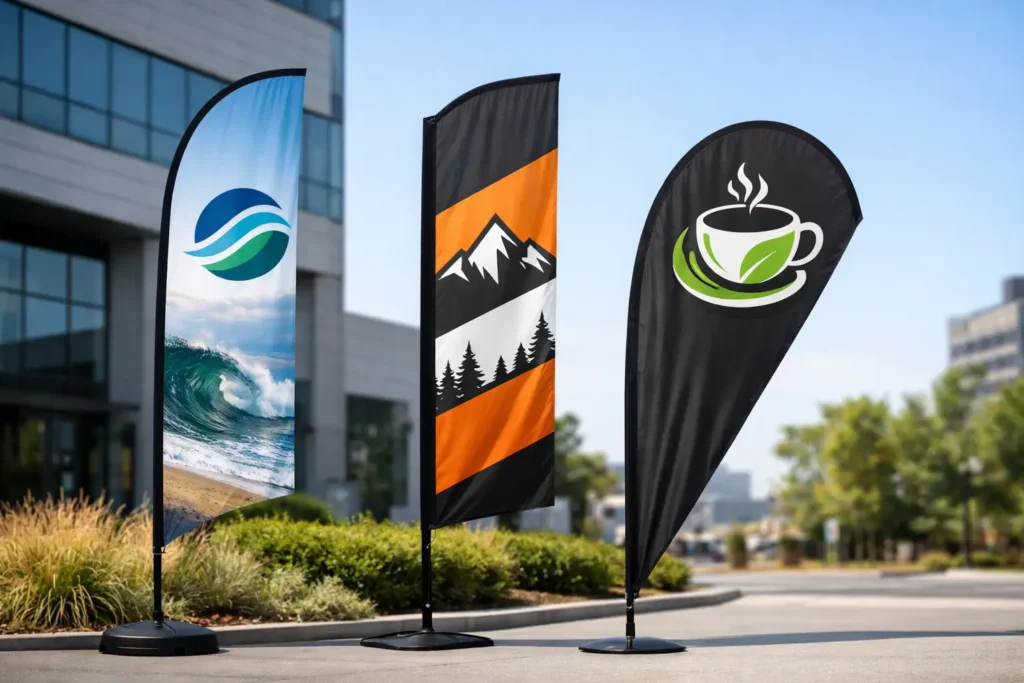
A storefront can have great inventory, a fundraiser can have a great cause, and an event can have a full schedule, but none of that helps if people drive past without noticing. Custom feather flags put your name, message, and colors in motion where people can see them. They are built for the moments when you need to turn foot traffic, road traffic, or a busy event crowd into attention.
For a car dealership, that might mean a row of tall flags announcing a sale. For a school booster club, it could be branded flags marking the concession stand and game-day entrance. For a local business, it may be as simple as making the front door easier to find. Custom flags are our specialty because the right display does more than decorate a space. It tells people where to look and what to do next.
Why Custom Feather Flags Work Outdoors
Feather flags are tall, lightweight fabric displays mounted on flexible poles. Their curved top and vertical shape create a clean, active look, even when wind conditions are mild. Unlike a flat sign that blends into a wall or window, a feather flag adds height and movement to the visual field.
That movement matters. People naturally notice a flag shifting at the edge of a parking lot, along a sidewalk, or outside an event tent. The format is especially effective for temporary promotions, recurring community events, open houses, races, tournaments, and retail specials because it is easy to set up, relocate, and store between uses.
Visibility is not the only reason to choose this format. A well-designed feather flag can carry a logo, short message, directional cue, or sponsor recognition without taking up much ground space. That makes it a practical choice when a large rigid sign is not possible or when your display needs to travel from one event to another.
Start With the Job Your Flag Needs to Do
The best flag is not always the largest one or the one with the most text. Start by deciding what you need people to notice from a distance. A grand-opening promotion has a different job than a registration marker, and a sponsor flag has a different job than a directional sign.
If your goal is roadside visibility, prioritize a tall size, bold color contrast, and a message that can be read in seconds. If the flags will stand near a trade show booth or under a canopy, a smaller size may be more proportionate and easier to place. For a golf outing or outdoor tournament, several matching flags can create a professional event footprint while also giving sponsors meaningful exposure.
Think about location before choosing dimensions. Measure the available ground area, look for overhead obstructions, and consider where guests or customers will approach from. A flag positioned behind parked vehicles or tucked against a busy building facade will not work as hard as one placed at an entrance, driveway, or clear line of sight.
Choose a Shape That Fits Your Message
Feather flags are popular because their shape provides generous printing space while maintaining a distinctive silhouette. They work well for logos, vertical messages, and designs with large graphic elements. But shape should still follow purpose.
A feather shape offers a polished, streamlined look for retail promotions, schools, clubs, and branded events. Teardrop flags have a tauter profile and can be a good choice in breezier conditions or when you want the artwork held in a tighter visual area. Swooper-style flags can provide a larger, more dramatic message area for promotions where a bold word such as “SALE,” “OPEN,” or “WELCOME” is the main goal.
There is no single right answer. The right shape depends on your artwork, viewing distance, wind exposure, and the rest of your display. Matching flag shapes across an event usually creates a more organized appearance, while mixing formats can make sense when each flag serves a different purpose.
Keep the Artwork Simple and Readable
A feather flag is not a brochure. It should communicate one main idea quickly. The strongest designs typically feature a recognizable logo, one short phrase or callout, and colors that are clearly separated from the background.
Avoid trying to fit service lists, phone numbers, detailed schedules, or several competing messages into one flag. Fine type and crowded artwork may look acceptable on a computer screen but become difficult to read from a street, parking lot, or field. If you have several messages to share, use a series of flags. One can feature your logo, another can identify the event, and another can point visitors toward registration, parking, or an entrance.
Color selection is equally practical. High contrast helps lettering stand out. Dark lettering on a light field, or light lettering on a dark field, is usually easier to read than similar tones placed together. Brand colors should lead the design, but sometimes a clean background color is what makes those brand colors visible.
If you already have finished artwork, provide the best original file available. Vector artwork is ideal for crisp logos and type at larger sizes. If all you have is a low-resolution image, an experienced design team can often rebuild the logo or create a flag concept that works for the intended size and shape. At Flags Made, a full-time graphic design staff can help turn an idea, existing logo, or rough file into production-ready artwork.
Select the Right Base for the Surface
The flag pole gets attention, but the base keeps the display useful. Base selection should be tied to where the flag will stand and how often you expect to move it.
A ground spike is a practical choice for grass, dirt, and other soft outdoor surfaces. A cross base with a water weight can work well on pavement, concrete, or indoor flooring where driving a spike is not an option. Heavy-duty base options may be appropriate for high-traffic locations, long-term placement, or conditions where extra stability is needed.
Do not treat wind as an afterthought. All fabric displays are affected by weather, and very high winds can shorten the life of poles, hardware, and printed fabric. If your location is especially exposed, discuss the expected conditions before ordering. You may need a heavier base, a different placement plan, or a policy of taking flags down during severe weather.
Single-Sided or Double-Sided Printing?
This decision depends on how viewers will approach the flag. Single-sided flags are commonly printed so the image shows correctly on one side and appears reversed on the back. They are a cost-conscious choice for many outdoor applications, especially when the flag is viewed primarily from one direction or the design is simple enough to remain recognizable in reverse.
Double-sided printing gives you readable artwork on both sides and is often worth considering for entrances, sidewalks, dealership lots, and events where people approach from multiple directions. It can provide a more finished look for logos, sponsor names, and text-heavy designs. The trade-off is a higher production cost and a slightly different fabric construction, so the choice should reflect the visibility you actually need.
Build a Display, Not Just a Single Flag
One custom feather flag can make a useful statement. Three, five, or more can create a destination. Repetition gives your brand more presence and helps guide visitors through a space.
For example, a retail location might place matching flags at both driveway entrances and near the front door. A 5K organizer might use a set at registration, the start line, the finish area, and sponsor stations. A nonprofit can use the same flag system at recurring fundraisers, community fairs, and donor events, making the organization easier to recognize each time.
Consistency does not mean every flag needs identical copy. Use a shared color palette, logo treatment, and type style, then vary the main message. That approach keeps the display connected while letting each flag do a specific job.
Plan for Reuse and Care
Custom feather flags are made to travel, but a little care goes a long way. Allow the fabric to dry before storing it if it has been exposed to rain. Keep poles, bases, and hardware together so setup is quick before the next event. Avoid leaving flags out through storms or unusually strong winds, and inspect poles and fittings regularly if the display is used often.
When ordering, think beyond the next weekend. A design tied only to a single date or one short-term offer may have limited reuse value. If you host annual events, a more evergreen flag design can continue working year after year. Date-specific flags still have a place, particularly for grand openings and campaign launches, but they should be ordered with a clear purpose.
A clear message, the right size, and a stable base can make a custom feather flag one of the hardest-working pieces in your event or promotional setup. When you are ready, bring your logo, your idea, or even just your goal to the Flag Makers, and ask for a quote built around where your flags need to perform.