 Skip to content

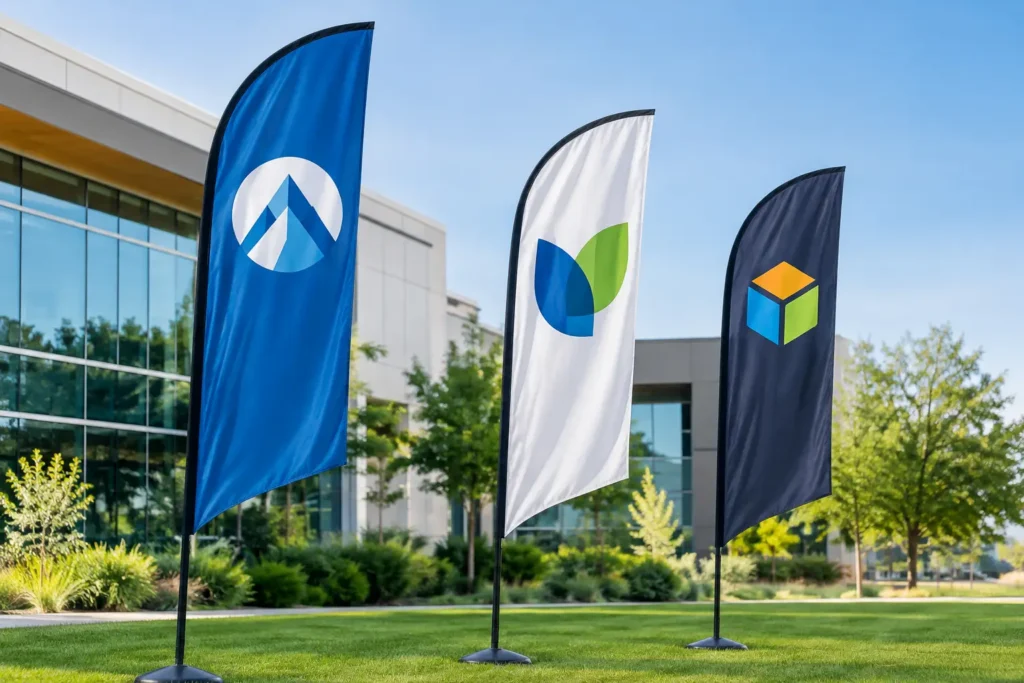
A busy parking lot, a crowded festival entrance, or a dealership row gives people only seconds to notice your message. Promotional flags earn attention in those moments because they add movement, height, and color where flat signs can disappear. The right custom flag makes your brand easier to spot before a customer ever reaches your door, tent, booth, or event table.
For businesses and organizations that depend on local visibility, that matters. A well-designed flag can guide visitors, announce a sale, recognize a sponsor, rally supporters, or put a logo in front of traffic all day. The best choice is not simply the biggest flag. It is the format that fits where you will use it, what you need it to say, and how long it needs to perform.
What Promotional Flags Do Better Than Static Signs
Flags are built to be seen from a distance. Their vertical profile rises above parked cars, folding tables, crowds, and retail displays. Outdoors, wind creates motion that naturally pulls attention. Indoors, a clean flag display can frame an entrance, registration area, stage, or product demonstration without taking up much floor space.
They are also highly flexible. A neighborhood restaurant may use a swooper flag to promote lunch specials near the road. A college program may line an open house walkway with school-color feather flags. A nonprofit can use branded flags, tents, and table covers to create one recognizable fundraiser setup. The message can be promotional, directional, celebratory, or campaign-focused, but the job is the same: make your organization visible at the point where people make decisions.
Unlike a permanent sign, custom flags can travel. Pack them for trade shows, golf outings, tailgates, grand openings, community events, and mobile promotions. That portability makes them especially useful for teams that work across multiple locations or need branded materials that can be reused throughout the year.
Choosing the Right Promotional Flag Style
The right flag shape depends on viewing distance, available space, weather conditions, and the amount of information in your design. A simple logo and bold offer can work on almost any format. A longer message needs more room and a layout that remains readable when the fabric moves.
Feather flags for versatile event visibility
Feather flags have a tall, curved profile that looks polished at entrances, sidewalks, outdoor booths, and retail locations. They are a strong all-purpose option for businesses that want a prominent logo, short callout, or directional message. Their shape gives designers useful vertical space while keeping the display narrow enough for busy event areas.
Use feather flags when you need a professional display that can move from one promotion to the next. They work well in sets, too. Place several along a route, booth perimeter, or storefront frontage to create a stronger visual presence than one sign alone.
Teardrop flags for compact, wind-friendly displays
Teardrop flags hold a tighter shape, which can be helpful in breezier outdoor locations. Because the fabric stays more taut, they are a practical choice for logos, icons, and short messages that need to remain recognizable from different angles. They also fit well near entrances, registration areas, parking lots, and sponsor stations.
The trade-off is design space. A teardrop flag is not the best place for a paragraph, a dense service list, or tiny contact details. Keep the copy focused and let the color and logo do the work.
Swooper flags for roadside attention
Swooper flags are made for high-energy visibility. Their distinctive shape and motion make them popular for car dealerships, retail promotions, seasonal sales, and roadside advertising. If your goal is getting passing traffic to notice a straightforward message such as “Now Open,” “Sale,” “Food,” or “Event Today,” a swooper format gives that message a strong visual boost.
For roadside use, large type matters more than clever copy. Drivers should understand the main message in a glance. Save phone numbers, addresses, and detailed offers for signs, handouts, or your other marketing materials.
Outdoor, indoor, and specialty flags
Traditional outdoor flags are a smart choice for permanent or recurring display at a building, facility, school, club, or community organization. Indoor flags bring formality to offices, ceremonies, podiums, lobbies, and meetings. Smaller stick flags, car flags, antenna flags, car mirror socks, and golf pin flags are ideal when participation and distribution matter as much as visibility.
These specialty options can turn supporters into part of the display. A booster club can hand out stick flags at a game. A political campaign can build recognition through car flags. A golf tournament can use branded pin flags to place sponsors directly on the course. Different formats solve different visibility problems, which is why custom production gives buyers more control than a one-size-fits-all sign package.
Start With the Location, Not the Artwork
A good custom flag project begins with a practical question: where will people see it? The answer shapes nearly every production decision.
For a sidewalk or storefront, consider pedestrian traffic, clearance requirements, and whether the message must be visible from both directions. For a parking lot or roadside location, prioritize height, contrast, and short copy. For a trade show, think about booth boundaries, venue rules, lighting, and whether your flag needs to work alongside a canopy tent, banner, or table cover.
Weather deserves the same attention. Outdoor flags need appropriate fabric, finishing, poles, and bases for their environment. A flag used occasionally at a calm weekend event has different needs than a display set up regularly outside a busy business. No fabric display lasts forever under sun, wind, rain, and repeated handling, but commercial-grade materials and the correct setup help protect your investment.
Base selection matters, too. Ground stakes can be useful on grass or soil, while cross bases, weighted bases, or other mounting solutions fit hard surfaces. The best base is the one that keeps the display stable without creating a hazard for customers or staff.
Design for a Fast Read
The most effective flag designs are rarely the most crowded. People often see a flag while walking, driving, or scanning a busy event space. Your message needs to register quickly.
Start with one priority: your logo, a product category, an event name, a sponsor message, or a simple promotion. Then give it room. Large type, strong contrast, and a limited color palette are easier to read than an artwork file packed with small details. If your logo has fine lines or small text, it may need adjustment for fabric printing and long-distance viewing.
A useful rule is to make the main message readable before the viewer can read anything else. For example, a roofing company may lead with its logo and “Free Estimates.” A school fundraiser may lead with the event name and colors. A retailer may lead with “Clearance Sale.” Supporting information should never compete with the message that brings people in.
Also plan for the shape of the flag. Artwork that looks perfect on a rectangular screen may need to be repositioned for a feather, teardrop, or swooper template. Keep important logos and words away from curved edges, seams, and areas affected by the pole sleeve. An experienced design team can rebuild a low-resolution logo, refine existing artwork, or create a complete concept when you only have an idea to start with.
Build a Display System, Not Just a Flag
One custom flag can make a statement. A coordinated display system makes an organization look established. When your flags use the same colors, logo treatment, and campaign message as your banners, canopy pop-up tent, table cover, podium banner, or pennants, people connect the pieces immediately.
This is particularly valuable for recurring events. A school can reuse a branded event kit for admissions days, athletics, and fundraising. A dealership can rotate sale messaging while keeping its core identity consistent. A nonprofit can give sponsors clear placement across flags, banners, and event signage. The result is more visibility without creating a different look every time.
It also helps to plan quantities early. A single flag may be enough for a small office entrance, but a large outdoor activation often needs several displays to create a visible footprint. Consider arrival points, photo areas, stage zones, parking entrances, and any place attendees may need direction. Ordering as a coordinated project often produces a more useful result than adding pieces one at a time.
Get Custom Production Support Before You Order
Custom flags are our specialty, but the production process should not feel complicated. Bring your logo, event details, approximate size needs, quantity, and intended use to the conversation. If you have finished artwork, it can be reviewed for print quality and placement. If you do not, a full-time graphic design staff can help rebuild a logo or develop a flag design that fits the format.
It is worth asking about fabric, printing method, finishing, pole hardware, bases, and expected use conditions before approving a quote. The lowest-cost option is not always the best value if the flag will be used frequently outdoors or needs to represent a major brand campaign. On the other hand, a simple event-only flag may not need the same configuration as a long-term storefront display.
When your audience needs to find you, cheer for you, or act on an offer, make the message impossible to miss. Choose a flag format that suits the setting, keep the design focused, and let a custom display do the hard work of being seen.