 Skip to content

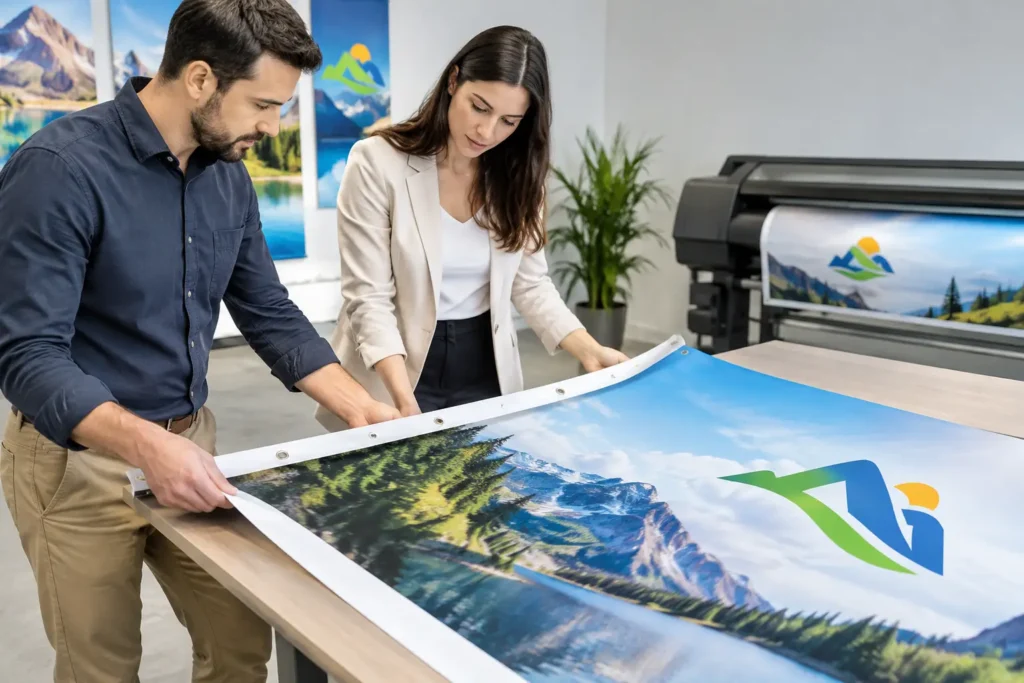
A banner that looks sharp in a product photo can still disappoint at a busy event, outside a storefront, or across a school gym. A useful banner printing review starts with the real job the banner needs to do: get noticed, communicate fast, and keep representing your organization well after setup day.
For a dealership sale, nonprofit fundraiser, trade show booth, tournament, or community celebration, the lowest price is rarely the whole story. The right banner format, material, print method, and finishing details affect how your message reads from a distance and how well the display holds up to handling, weather, and repeat use.
What a Banner Printing Review Should Really Cover
The best banner is not always the biggest, thickest, or most expensive option. It is the one built for its location and purpose. Indoor event signage has different needs than an outdoor sponsor banner. A podium banner needs a clean, professional presentation at close range, while a large fabric banner may need to attract attention across a crowded field or exhibition floor.
Start by considering where people will see it. If viewers will be walking past your table, smaller type and detailed logos may work well. If they will be driving past a promotion or viewing a banner from bleachers, your design needs larger lettering, stronger contrast, and a simpler message.
A dependable review should look at five practical areas: material, print quality, size, finishing, and support. These are the details that separate a banner that merely exists from one that works hard for your organization.
Material should match the setting
Fabric banners are a strong choice when appearance matters. They offer a polished look, travel well, and work especially well for indoor displays, podiums, clubs, ceremonies, retail spaces, and repeat event use. Depending on the fabric and printing process, colors can appear rich and graphics can hold fine detail.
For outdoor applications, the material must suit the exposure. Wind, rain, sunlight, and frequent installation all put stress on a display. Ask how the banner will be used and how long it needs to remain in service. A banner used for a weekend event has a different requirement than one displayed outside a business for an extended promotion.
There is always a trade-off. Lightweight materials are easier to carry and install, but may need more care in windy conditions. Heavier display materials can feel more substantial, yet they may not be the best fit for every temporary event. The Flag Makers can help buyers choose a material based on the actual environment instead of forcing every project into one standard option.
Print quality is more than bright color
A crisp banner begins with usable artwork. Blurry logos, screenshots, low-resolution files, and tiny text can create problems before production even starts. A professional printer can often improve or rebuild artwork, but the original file still matters.
When reviewing print quality, look at color consistency, edge sharpness, readability, and image detail. Brand colors should feel close to the colors your audience already recognizes. Lettering should remain easy to read, particularly when it is viewed at the intended distance. A detailed photo may look excellent up close but lose its impact when printed too small.
Consider whether your banner needs single-sided or double-sided printing. A banner mounted against a wall only needs one visible side. A display hanging in an open space, attached to a railing, or viewed from both directions may benefit from a double-sided format. That choice affects both visibility and budget, so it is worth deciding early.
Banner Printing Review: Size and Layout Matter
Size is one of the most common ordering mistakes. Buyers often choose dimensions based on what seems large enough, then discover the banner looks undersized in a wide lobby, parking lot, or sports venue. Measure the available space and think about the distance between the banner and the viewer.
A good rule is to build the message around one main idea. Your event name, promotion, organization, or call to action should be immediately clear. Supporting details can follow, but they should not compete with the main message.
For example, a fundraiser banner may lead with the event name and date, followed by a sponsor logo area. A dealership banner may lead with the offer, then include location and contact details. A club banner may put the organization name, crest, and school colors front and center. Each application calls for a different layout, even if the banners share the same dimensions.
Avoid trying to fit every service, sponsor, phone number, and social message into one design. A banner is not a brochure. Strong spacing and high-contrast color combinations make a display easier to understand in seconds.
Finishing details affect installation
A banner needs a practical way to hang, mount, or display. Grommets, pole pockets, reinforced edges, and other finishing options determine how the finished piece works in the field. The right choice depends on the installation method.
Grommets are useful when a banner will be tied to fencing, mounted to a wall, or secured at multiple points. Pole pockets are a natural choice for displays that slide over a rod or crossbar. If a banner will be used again and again, reinforced finishing can be a smart investment because the stress is concentrated at the points where it is attached.
Before placing an order, know the answers to a few simple questions. Will the banner hang flat against a surface? Will it be suspended? Is it going on a tent, fence, table, or podium? Who will install it, and what hardware do they already have? These answers help prevent last-minute workarounds with zip ties, tape, or an awkward fit.
Durability Depends on How You Use It
Durability is not a single feature. It comes from the combination of material, printing, finishing, storage, and installation. Even a well-made banner can wear out early if it is folded while wet, dragged across rough pavement, or left loosely secured in high wind.
For event teams that use banners repeatedly, proper storage makes a noticeable difference. Let outdoor displays dry before packing them away. Roll or fold them carefully according to the material. Keep hardware together, and label each banner so setup crews can find the right piece quickly.
If the banner will be exposed outdoors, talk openly about the expected conditions. A local charity 5K on a calm Saturday morning is different from a month-long roadside promotion. The production recommendation should reflect that difference. Honest guidance is more valuable than a one-size-fits-all promise.
Design support can save the project
Many organizations have a logo but not a finished banner file. Others have artwork created years ago that needs to be cleaned up, resized, or updated. This is where direct design support becomes especially useful.
An experienced in-house graphic design team can recreate a logo, refine supplied artwork, adjust colors, or build a complete banner concept from a starting idea. That support is valuable for first-time buyers, but it also helps busy marketing teams that need a production-ready display without spending extra time managing file corrections.
Provide whatever you have: logo files, brand colors, photos, event details, rough sketches, and examples of the look you want. Also explain what the banner needs to accomplish. A designer can make better choices about scale, typography, and layout when they understand whether the finished piece is for a trade show table, a golf event, a parade, or a school entrance.
When Custom Production Is the Better Choice
Template ordering can work for simple, short-term signs. Custom banner production makes more sense when your organization needs a specific size, custom shape, branded colors, special finishing, or a display that fits with other promotional materials such as table covers, tents, flags, or podium banners.
It is also the better route when you need quantity. Schools, political groups, event organizers, clubs, and multi-location businesses often need coordinated displays rather than one isolated sign. A quote-driven process gives buyers room to discuss volume, specifications, artwork, and delivery needs before production begins.
A strong banner does not have to be complicated. It simply has to be intentional: the right message, the right format, and the right construction for the place it will be seen. Bring your idea, logo, or finished artwork to a manufacturer that knows custom displays, ask practical questions, and build a banner your audience can spot and remember.