 Skip to content
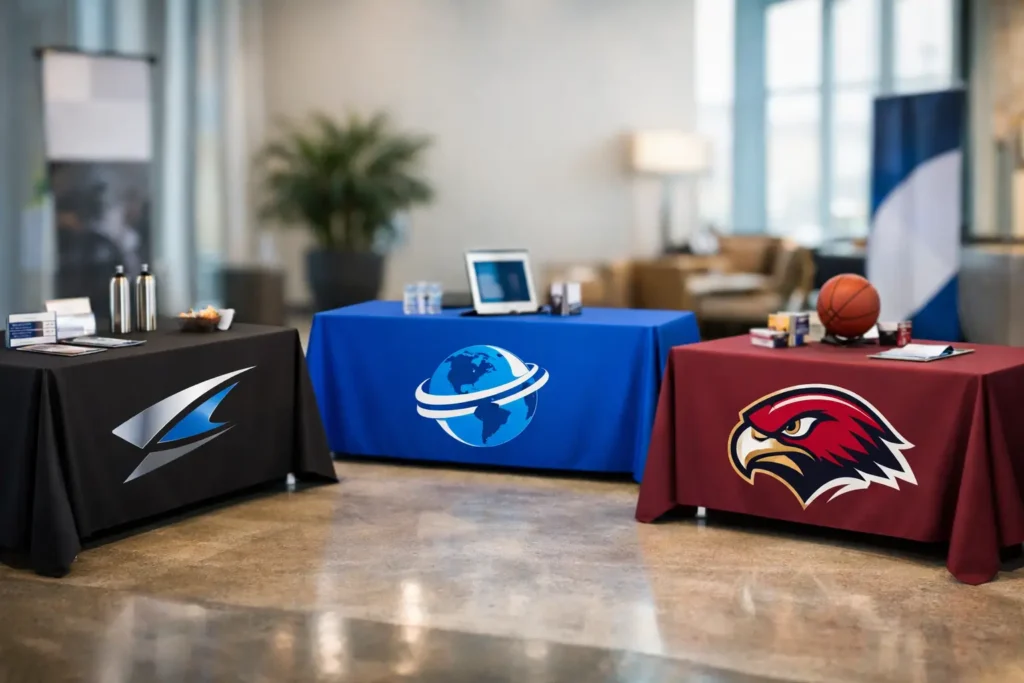
A plain folding table can make even a well-planned event look unfinished. Custom table covers change that fast. They put your logo, colors, message, and contact information at eye level while hiding boxes, supplies, and table legs below. At a trade show, fundraiser, open house, recruiting event, or community festival, that extra brand space works hard from the first conversation to the last.
For businesses and organizations that already use custom flags, banners, or pop-up tents, a printed table cover creates a more complete display. It turns the place where people sign up, pick up information, buy merchandise, or ask questions into part of the promotion.
Why Custom Table Covers Earn Their Space
Event tables are rarely optional. Registration needs a surface. Sales teams need a place for brochures, samples, and payment equipment. Nonprofits need room for donation forms. Schools and clubs need a spot to greet supporters. Since the table is already there, covering it with a branded display is a practical way to increase visibility without adding another piece of equipment to set up.
A professionally printed cover also helps people recognize who they are talking to. That matters at crowded trade shows, street fairs, and sponsor events where attendees may see dozens of booths in a few hours. A large logo across the front gives visitors an immediate answer: this is your organization, this is what you represent, and this is where they can find you.
The effect is not limited to large companies. A local dealership can use a table cover at a weekend promotion. A youth sports team can use one at registration. A political campaign can create a recognizable volunteer check-in station. A golf event organizer can pair one with branded flags and signage at the clubhouse. The right cover makes a temporary table look intentional and ready for business.
Start With the Table You Actually Use
The best-looking cover is one that fits correctly. Before requesting a quote, measure the length, width, and height of your table. The most common event tables are 4-foot, 6-foot, and 8-foot folding tables, but not every table uses standard dimensions. A few minutes with a tape measure can prevent an awkward fit later.
Fitted, throw, and stretch styles
A fitted table cover has shaped corners and a tailored look. It is a strong choice for trade show booths, corporate events, and any display where a clean, structured appearance is the priority. Because it follows the table’s dimensions closely, accuracy matters when ordering.
A standard throw style drapes over the table and hangs down on all sides. It is versatile, easy to place, and often a good fit for organizations using tables in more than one setting. If your team needs to move quickly from a school event to a community festival, a throw cover can be a practical choice.
Stretch table covers use fitted fabric that pulls snugly around the table legs. They create a modern silhouette and stay tidy in active event environments. This style can be especially useful where foot traffic is heavy, but it depends on the table shape and leg design. If the table is unusual, a traditional fitted or throw cover may be the safer route.
Open-back options for working tables
Not every table is only for display. If staff members need to store literature, extra shirts, prize items, or personal bags underneath, an open-back table cover is worth considering. It gives the front of the table a branded finish while keeping supplies accessible from behind.
This is a small choice with a big operational benefit. A closed cover can look polished, but it may require staff to lift fabric or walk around the side whenever they need inventory. For sales tables, registration desks, and information booths, an open back often keeps the work area more organized.
Design for the Way People See a Booth
Most attendees will not stand directly in front of your table and study the artwork. They will walk past, scan the room, or approach from an angle. That means the design should communicate clearly at a glance.
Place the primary logo where it will be visible from the front. Use high-contrast colors so key elements do not fade into the fabric or disappear in bright outdoor light. A short message, website, phone number, campaign line, or service category can help, but only if it stays readable from several feet away. A table cover is not the place for a full page of copy.
Keep the most important information on the front panel. Side panels can carry supporting branding, social handles, sponsor logos, or a secondary message, but they should not be the only place your organization name appears. At many events, tables sit close together, and side graphics may be blocked by neighboring booths.
If you have finished artwork, it helps to provide the cleanest version available. Vector logo files generally reproduce well at larger sizes, while low-resolution screenshots and small web images can look soft when printed across a table front. If your artwork is not ready, that should not stop the project. Flags Made has a full-time design staff that can rebuild a logo, clean up supplied art, or develop a complete design around your event goals.
Choose Fabric and Printing With the Event in Mind
A table cover should look sharp, but it also needs to handle transport, setup, and repeat use. The right material depends on where and how often it will be used.
For indoor trade shows, conferences, banquets, and school events, a fabric cover with full-color printing delivers a polished presentation and folds down for travel. It can be used again and again when stored properly. For outdoor promotions, consider the conditions: wind, dust, damp grass, food service, and frequent handling all affect what will be practical.
Full-color printing gives you room to use logos, color fields, photos, gradients, and detailed graphics. That flexibility is especially helpful for brands with established visual standards or organizations featuring sponsor marks. Still, more color is not automatically better. A bold logo on a clean background often reads more clearly than a crowded design filled with small details.
Ask about the print method and fabric option that suit your artwork and expected use. A quote-driven custom project gives you the chance to match the finished product to the real job instead of forcing your design into a one-size-fits-all template.
Build a Display, Not Just a Covered Table
Custom table covers work best as part of a coordinated event setup. A table at the front of a booth can introduce your brand, while a feather flag draws attention from farther away. A canopy pop-up tent can provide overhead visibility at outdoor events. Fabric banners can add a message behind the table, and smaller branded items can keep the display active beyond the booth.
That does not mean every event needs every product. A six-foot table cover and one vertical flag may be enough for a sidewalk promotion. A major trade show booth may call for a more complete package. The useful question is simple: what will people see first, what will they see up close, and what should they remember after they leave?
Think about staff movement, too. Leave enough clear space for product demonstrations, sign-up tablets, giveaway items, and conversation. The cover should support the table’s purpose, not compete with it. If your team is handing out brochures, do not bury the front logo behind stacks of paper. If you are selling merchandise, keep the display organized so the printed cover still has room to show.
Plan for Repeat Events
A waterproof / oil resistant branded table cover can deliver value across a busy calendar. Store it clean and dry after each event, fold it rather than stuffing it into a box, and avoid placing sharp hardware directly on the printed fabric. If it needs cleaning, follow the care directions for the material and print process.
It also pays to think beyond one event date. A cover with a general organization logo can work at trade shows, fundraisers, recruiting events, community gatherings, and annual meetings. A cover built around a very specific promotion may have more immediate impact but a shorter usable life. Neither choice is wrong. It depends on whether you need a lasting branded asset or a targeted campaign display.
When you are ready to turn an ordinary event table into a clear, hardworking brand station, bring the table measurements, logo files, event details, and your best idea to the conversation. The Flag Makers can help shape those details into custom table covers that look ready for the crowd.