 Skip to content
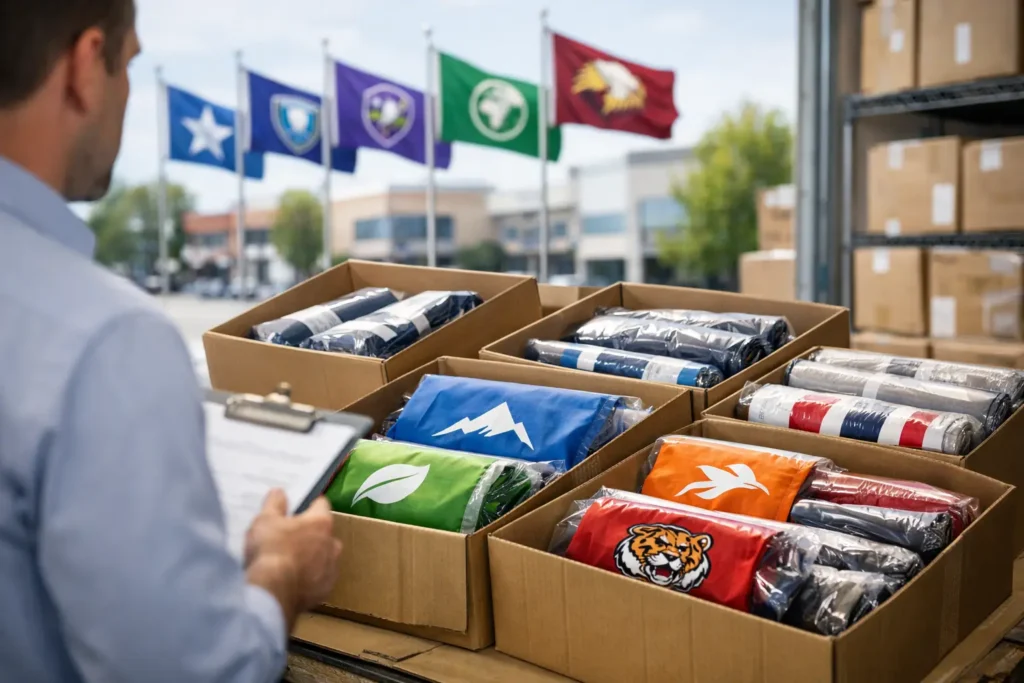
When 50 or more locations need branded flags, the challenge is not simply ordering a higher quantity. It is keeping every site on brand, on schedule, and equipped with the right display products. Managing Bulk Custom Flag Orders Across 50+ Locations calls for a clear plan before production begins, especially when locations have different layouts, local contacts, and event dates.
Start With One Master Rollout Plan
A multi-location flag order works best when one person or team owns the master plan. That does not mean every local manager loses input. It means decisions about artwork, product specifications, quantities, and delivery dates have one source of truth.
Start by separating what is universal from what may vary by location. Your company logo, approved colors, core messaging, and print standards should stay consistent. Store numbers, regional offers, sponsor logos, or event dates may change. Making that distinction early prevents 50 individual versions from turning into 50 separate production problems.
Your master plan should identify the display purpose at each site. A dealership may need car flags and swooper flags for roadside visibility. A retail chain might need outdoor flags near entrances, branded table covers for promotional stations, and canopy tents for grand openings. A school district or nonprofit may need stick flags for attendees plus larger outdoor flags for a fundraiser. The right format depends on where people will see it and how long it needs to perform.
Managing Bulk Custom Flag Orders Across 50+ Locations
The easiest way to control a large custom order is to have a rough quantity estimate before requesting a quote. This gives your production partner the information needed to organize quantities at a discount, artwork versions, and shipping without repeated back-and-forth.
For each location, include:
- Store, branch, campus, or event name
- Complete shipping address and receiving contact
- Products, sizes, and quantities needed
- Artwork version or local details to print
- Required arrival date and any delivery restrictions
Keep one shared approval process as well. A local manager may confirm the shipping address and quantity, but a central marketing contact should approve the final artwork. This protects brand consistency and stops last-minute edits after printing has started.
Standardize the Parts That Should Not Change
Use the same flag size, fabric, hardware, and print method wherever the viewing conditions are similar. Standardization makes reorders easier and gives locations a consistent look. If your locations are outdoors, decide whether the campaign calls for durable outdoor flags, feather flags, teardrop flags, or another format designed for repeated setup.
There are exceptions. A downtown storefront with limited sidewalk space may need a smaller display than a suburban location with a large parking lot. A golf outing may call for custom golf pin flags, while the sponsor tent needs a podium banner or table cover. Standardizing your core products does not mean forcing every location into the same setup.
Give Local Details a Controlled Place
Variable information should be planned, not added at random. If locations need their own phone number, store identifier, or event date, build an approved template with a designated area for that information. This helps every version look intentional rather than improvised.
If the artwork is incomplete, low resolution, or inconsistent between locations, address it before ordering. A full-time graphic design team can rebuild a logo, refine supplied files, or create a complete flag concept from a starting idea. That support matters when the same brand needs to look sharp from the first location to the fiftieth.
Build Production Time Into the Schedule
Custom flags are made to order. Large runs with multiple designs, products, and ship-to addresses need more coordination than a single-location order. Work backward from the first date flags must be installed, not the day the campaign is announced.
Allow time for artwork review, proof approval, production, packing, and shipping. Add extra room if local versions are still being finalized or if deliveries must arrive at locations with limited receiving hours. A rushed order can be possible in some cases, but it usually leaves less flexibility for changes and may limit shipping options.
Proofs deserve careful attention. Check logo placement, colors, spelling, contact information, and the correct location-specific details. Also confirm which side of the flag will face traffic or foot traffic. For double-sided flags, verify how the artwork reads on both sides before approval.
Plan Delivery and Setup, Not Just the Print Order
A flag that arrives without the proper pole, base, hardware, or setup instructions cannot do its job. Match each product to the installation environment and make sure every location receives the accessories needed to display it correctly.
For outdoor activations, local teams should know where flags will be placed, how they will be secured, and who is responsible for bringing them in during severe weather. For recurring campaigns, keep a few extra flags and hardware components available for replacements. Wind, frequent use, and unexpected events can create needs that were not in the original quantity plan.
At Flags Made, custom flags are our specialty, from a single design through coordinated multi-location programs. Bring a complete location list if you have one, or bring the basic idea if you do not. A detailed quote and an organized approval process give every location a better chance to look ready when the campaign begins.