 Skip to content
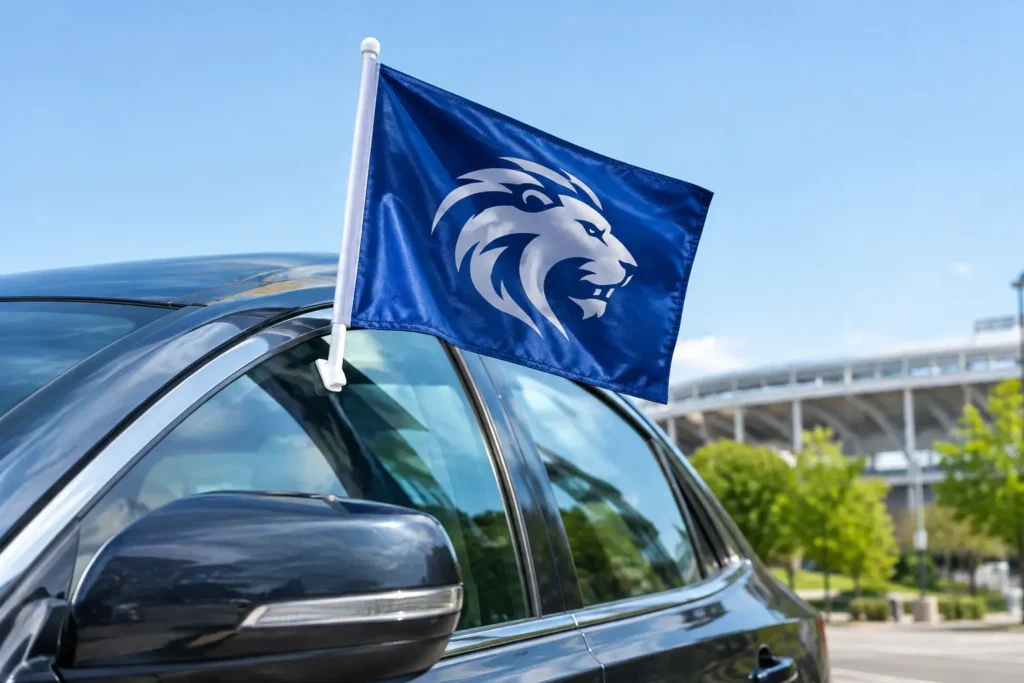
A car flag should turn heads for the right reason – not flap loose, block a driver’s view, or become a roadside hazard. Are car flags safe? They can be when the flag, pole, mounting method, driving conditions, and local rules all match the job. A properly fitted vehicle flag is an effective way to promote a dealership event, school spirit day, campaign, fundraiser, team, or community celebration.
The key is treating a car flag as a moving display, not just a piece of fabric attached to a window. Wind force rises quickly as speed increases, and a mount that feels firm in a parking lot can behave differently on the road. Choose commercial-quality components, install them carefully, and inspect them before every trip.
Are Car Flags Safe at Highway Speeds?
It depends on the specific flag system. Some vehicle flags are designed for temporary, lower-speed local driving or event parades, while others are built with reinforced poles and mounts intended for more demanding road use. The product’s instructions should always set the limit. Never assume that a flag is highway-ready simply because the pole fits onto a vehicle window.
At speed, the flag creates drag and repeated pull on the pole, bracket, and window area. A larger flag catches more wind than a smaller one. Heavy fabric, saturated rain-soaked material, and gusty conditions add even more load. This is why the right combination of flag size, fabric weight, pole flexibility, and secure mounting matters.
For everyday road safety, use a flag sized for the vehicle and the intended route. A compact car, for example, should not carry an oversized flag designed for a larger promotional setup. If your organization needs maximum visibility at a busy outdoor event, use car flags for arrivals, slow-moving traffic, parking areas, or a planned vehicle parade, then add feather flags, banners, tents, or table covers at the destination for bigger impact.
The Mount Is the Most Important Safety Feature
A quality vehicle flag mount should hold the pole firmly without damaging the vehicle or shifting during use. Window-mounted systems generally use the closed window to secure a bracket. The window must be fully closed over the mount, and the mount must sit flat and stable according to its instructions.
Do not improvise with tape, string, loose clamps, or a pole wedged into a partially open window. Those shortcuts can let the flag move unexpectedly, damage paint or trim, or create a distraction for the driver. They also make it much more likely that the display will come loose.
Before driving, pull gently on the installed pole and bracket. There should be no obvious wobble, sliding, or twisting. Check that the flag cannot contact the tire, road surface, side mirror, antenna, windshield, or another moving part of the vehicle. It should also stay clear of headlights, taillights, turn signals, license plates, and the driver’s sightlines.
If your vehicle has power windows, make sure passengers understand not to lower the window supporting the flag. That simple reminder prevents a secure installation from becoming an instant problem.
Choose the Right Flag for the Route and Weather
Custom car flags work best when they are made for vehicle use rather than adapted from a standard outdoor flag. The material needs to display your message clearly while remaining manageable in motion. The pole and sleeve or fastening points also need to be compatible with the chosen mount.
Wind is the condition to take most seriously. A steady breeze is one thing; gusts, storms, and crosswinds on exposed roads can place unpredictable pressure on a mounted flag. Remove car flags when high winds are expected, and do not leave them installed during severe weather.
Rain deserves attention, too. Wet fabric weighs more, may hang differently, and can place extra stress on the pole. If a flag gets soaked, remove it when practical and allow it to dry fully. Driving with a damaged, torn, or tangled flag is never worth the extra exposure.
For temporary promotions, consider the full schedule. A flag may be perfect for a dealership sale weekend or campus event but unnecessary for long commutes, highway travel, or unattended overnight parking. Removing the flag after the event protects both the display and the vehicle.
A Quick Pre-Drive Car Flag Check
A brief inspection takes less than a minute and can prevent most problems. Before pulling out, confirm these five points:
- The pole is fully seated in the mount and has no cracks, bends, or loose sections.
- The mount is secure, with the window or approved attachment point fully engaged.
- The flag is attached evenly, free of tears, twists, and loose hardware.
- The display does not block lights, plates, mirrors, or the driver’s visibility.
- Weather and planned driving speeds are appropriate for that specific flag system.
Check again after the first few miles, especially when using a new mount or driving in changing weather. Pull over safely if you hear unusual flapping, scraping, rattling, or tapping against the vehicle. Those sounds can signal that the flag has shifted or that a component needs adjustment.
Visibility Should Never Come Before Driver Awareness
A promotional flag is supposed to make your organization easier to notice, but it should never compete with safe driving. Avoid installing flags where they interfere with mirrors or create a blind spot. Do not place a flag in a position where it distracts the driver, passengers, cyclists, or pedestrians.
Keep the flag away from doors that will be opened frequently. At events, volunteers and visitors may not realize a pole is mounted near the window or roofline. A quick note to staff can prevent someone from grabbing, bending, or catching the flag while loading supplies.
It also pays to think beyond the vehicle itself. Leave enough clearance when entering garages, drive-thrus, covered parking, car washes, or low-clearance areas. Remove the flag before using an automatic car wash. A mounted pole can catch on equipment or overhead structures, causing damage to the display, the vehicle, or the facility.
Follow Local and Event-Specific Rules
Vehicle display rules can vary by state, city, roadway, and event venue. Laws may address obstructed visibility, covered license plates, unsafe projections, or items that resemble emergency equipment. Political groups, schools, sports clubs, and businesses should also check any rules issued by parade organizers, campuses, property managers, or event hosts.
The safe approach is simple: keep required vehicle equipment visible, avoid anything that could endanger others, and remove the flag if conditions or instructions change. If a custom car flag campaign will involve multiple vehicles, give every driver the same installation and removal guidance. Consistency helps protect the campaign, the people behind it, and your brand’s reputation.
Custom Design Can Support Safer Displays
A good car flag does not need to be oversized to be effective. Clear logo placement, high-contrast colors, readable type, and a design suited to the flag’s movement often do more for visibility than adding more fabric. A clean, bold message is easier to recognize from a passing car, across a parking lot, or in an event lineup.
That is where working with experienced flag manufacturers helps. Flags Made can assist with custom sizes, fabric choices, printing, and artwork so your vehicle display fits the purpose instead of forcing a one-size-fits-all solution. Whether you arrive with finished art or need a logo recreated, the goal is a flag that looks professional and performs as intended.
Car flags can be safe, memorable mobile advertising when they are properly matched to the vehicle and conditions. Use a secure mount, respect the product guidance, inspect it often, and remove it when the route or weather calls for caution. That leaves your message free to do what it was made to do: get noticed.