 Skip to content
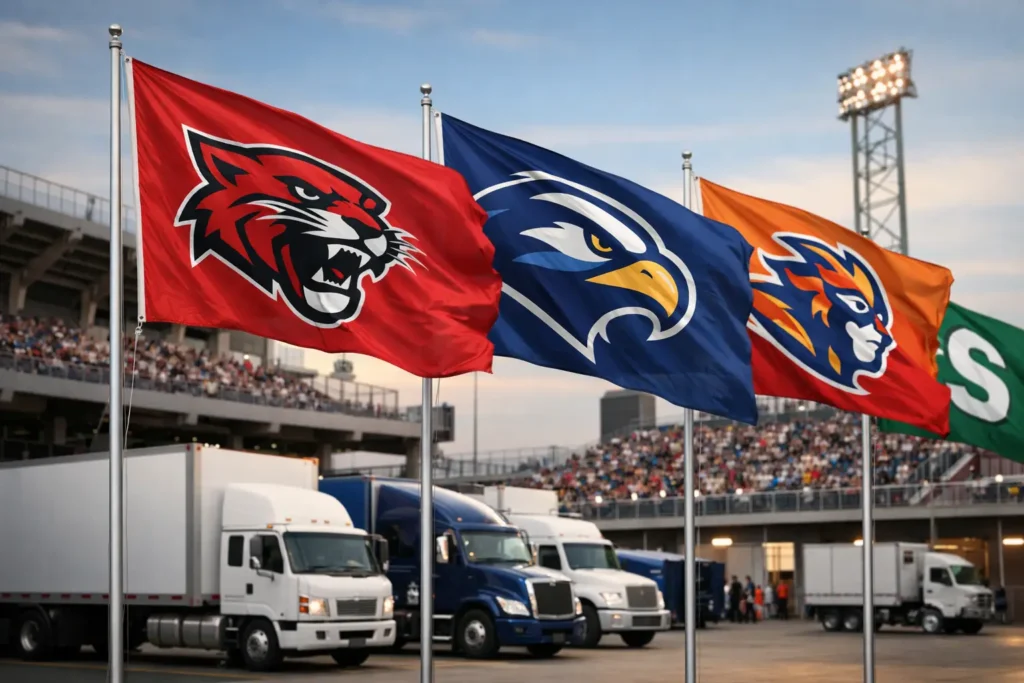
A packed stadium can make great branding disappear fast. High-Volume Custom Flag Purchasing for Sports Venue Logistics is not just about ordering more flags – it is about putting the right display in the right location, with enough durability and consistency to look sharp from the parking lot to the final whistle.
For athletic departments, venue operators, tournament directors, and sponsorship teams, custom flags help turn a facility into a recognizable home field. The challenge is coordinating large quantities without ending up with mismatched sizes, underperforming materials, or a delivery schedule that cuts too close to game day.
Start With the Venue, Not the Artwork
Before selecting flag styles, map the fan journey. A sports venue has different visibility zones, and each one calls for a different type of display. Parking entrances and roadways need tall feather flags, teardrop flags, or swooper flags that can be seen from a distance. Gate areas may need outdoor flags, branded canopies, and table covers for ticketing, security, or sponsor activations.
Inside the venue, stick flags can add color to concourses, club banners can reinforce premium areas, and podium banners can give press conferences, award presentations, and team announcements a clean branded backdrop. Golf events have their own needs, where custom golf pin flags, tent branding, and directional flags help identify holes, sponsor locations, and registration areas.
Buying one flag format for every location may appear simpler, but it usually weakens visibility. A small flag that looks great at a check-in table will not carry across a parking lot. A tall feather flag may be perfect outside but impractical for an indoor concourse with low ceilings.
Build a High-Volume Flag Plan by Zone
Large orders become manageable when purchasing is organized by location and purpose rather than by product alone. Count each display point, then add a realistic replacement margin for high-traffic areas, recurring games, and weather exposure. If a venue has 12 parking entrances, for example, determine whether each entrance needs two matching flags for visual balance, plus a few backups for quick replacement.
A practical order plan often includes four groups of products:
- Arrival displays for roads, parking lots, exterior walkways, and gates
- Wayfinding flags for entrances, sections, restrooms, merchandise, and hospitality areas
- Team and spirit displays for concourses, stands, pep rallies, and fan zones
- Sponsor displays for activations, suites, tournament areas, and media backdrops
This approach also makes approval easier. Facilities teams can review placement, marketing can approve branding, and event operations can confirm what needs to be installed before doors open.
Choose Materials for the Actual Conditions
Sports venues create hard-working display environments. Outdoor flags face sun, wind, rain, repeated setup, and frequent handling. Indoor flags may avoid weather, but they still need to look polished under bright arena lighting and stand up to a busy event calendar.
Fabric choice, finishing, and hardware should match the job. A flag intended for a single championship weekend can be specified differently than a set needed for an entire season. For permanent or repeat-use exterior displays, prioritize durable construction and proper hardware. For one-time promotions, a lighter-weight option may make sense if the budget is focused on maximum coverage.
Wind matters, too. Tall flag shapes create strong movement and visibility, but exposed locations may require heavier bases, ground stakes where permitted, or different placement. Do not assume every venue allows the same installation method. Concrete plazas, turf fields, city sidewalks, and indoor arenas all have different rules.
Keep Branding Consistent Across Every Format
High-volume orders often include multiple sizes and shapes. That is where brand consistency can slip. A logo that reads well on a rectangular outdoor flag may need adjustment for a narrow feather flag or a small stick flag. Sponsor logos may require their own sizing rules, especially when several partners share a display area.
Set one approved color standard, logo file, and message hierarchy before production begins. Decide what must appear on every item, what can be simplified at smaller sizes, and which sponsor marks belong in specific zones. For teams and schools, this may mean using the mascot and primary logo on fan-facing flags while reserving sponsor logos for activation spaces and banners.
If the artwork is incomplete, do not force a low-resolution image into a large-format order. Flags Made can rebuild logos, clean up supplied artwork, or help create a complete design that works across the planned display formats.
Plan Production, Delivery, and Storage Early
The biggest logistics mistake is treating custom flags like off-the-shelf inventory. Made-to-order flags require time for design review, proof approval, production, and shipping. A late artwork change can affect every item in a high-volume order, especially when several products share the same branding system.
Work backward from the event date. Leave room for internal approvals, venue installation coordination, and a delivery buffer. If the order supports a season-long program, consider ordering core team flags and evergreen venue branding together, then scheduling sponsor-specific pieces once those agreements are final.
Storage deserves a plan as well. Label flags by zone, pole type, and event use. Keep hardware with its matching display when possible. A well-organized storage system reduces setup time and helps staff spot missing parts before the next game.
Custom Flags are our specialty, and a quote-driven plan gives your venue team room to match sizes, shapes, fabrics, printing methods, and quantities to the way your fans actually move through the property. Start with the venue map, confirm the display zones, and get the production conversation moving well before the crowd arrives.